The Convergence of Smart Home Hardware Development and External AC Adapters
In the contemporary connected device landscape, the Internet of Things (IoT) has evolved from simple remote-switched peripherals to sophisticated edge-computing nodes, ambient intelligence clusters, and interoperable Matter-over-Thread mesh hubs. As IoT device architects push the boundaries of microcontrollers, neural processing units (NPUs), dual-band Wi-Fi 6/6E radios, and multi-protocol antennas, the critical role of external AC adapters is frequently underestimated during early engineering cycles. Selecting, designing, and packaging an AC-DC power adapter is no longer merely an afterthought in Bill of Materials (BOM) management; it is a vital engineering baseline that defines system uptime, RF signal-to-noise ratio (SNR), out-of-the-box user experience, and worldwide regulatory clearance.
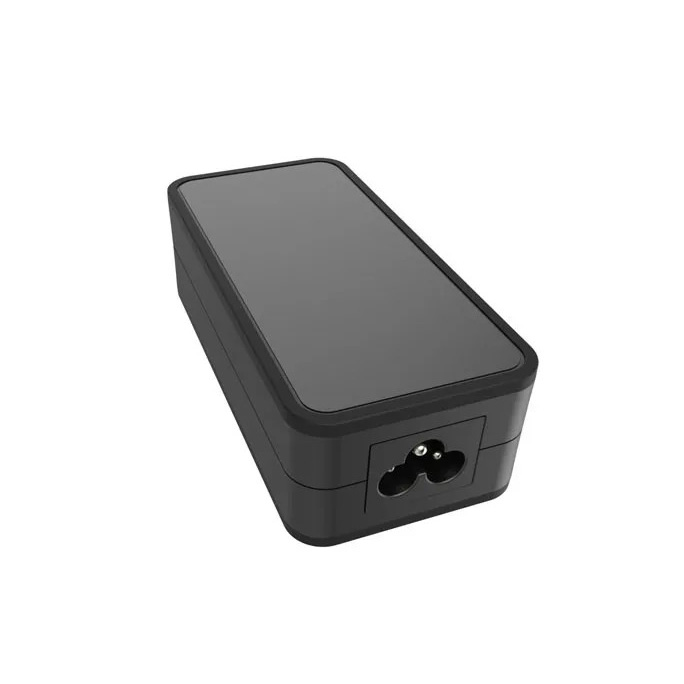
For smart home developers and device bundling procurement specialists, pairing the right external power supply mitigates a multitude of mission-critical liabilities. Subpar ripple noise generated by low-grade switching regulators directly desensitizes sensitive sub-GHz and 2.4 GHz RF transceivers, causing intermittent Zigbee packet dropouts, Wi-Fi disconnections, and micro-controller latch-ups. Furthermore, under modern strict retail packaging paradigms, delivering unified, compliant hardware sets ready for international customs clearance requires power supplies certified across Tier-1 territories (UL/cUL 62368-1 for North America, CE/EN 62368-1 for Europe, UKCA for Great Britain, PSE for Japan, and CCC for China). FuYun (RUIYU) Technology stands at the intersection of high-density switching topology and OEM/ODM bundling requirements, bridging design constraints with volume production reliability.
Ultra-Low Standby & ErP Compliance
Smart home peripherals remain plugged in 24/7/365. Meeting EU CoC Tier 2 and US DoE Level VI standards requires quiescent no-load consumption below 75mW, ensuring that edge hardware clusters maintain minimal baseline power consumption without thermal penalty.
Strict EMI/EMC Suppression
Miniaturized smart home enclosures concentrate wireless transceivers adjacent to power lines. Our AC adapters integrate reinforced differential and common-mode filtering stages to keep conducted and radiated emissions well beneath FCC Part 15B Class B thresholds.
Optimized Bundling SKUs
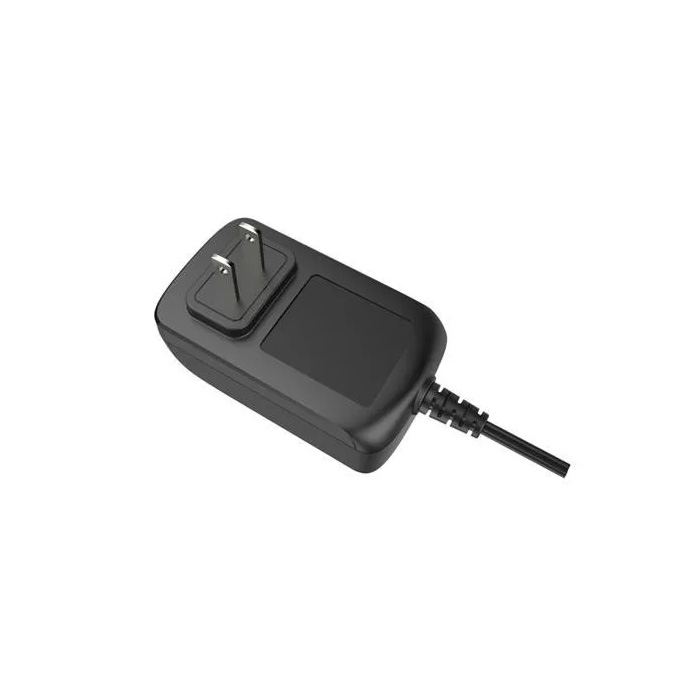
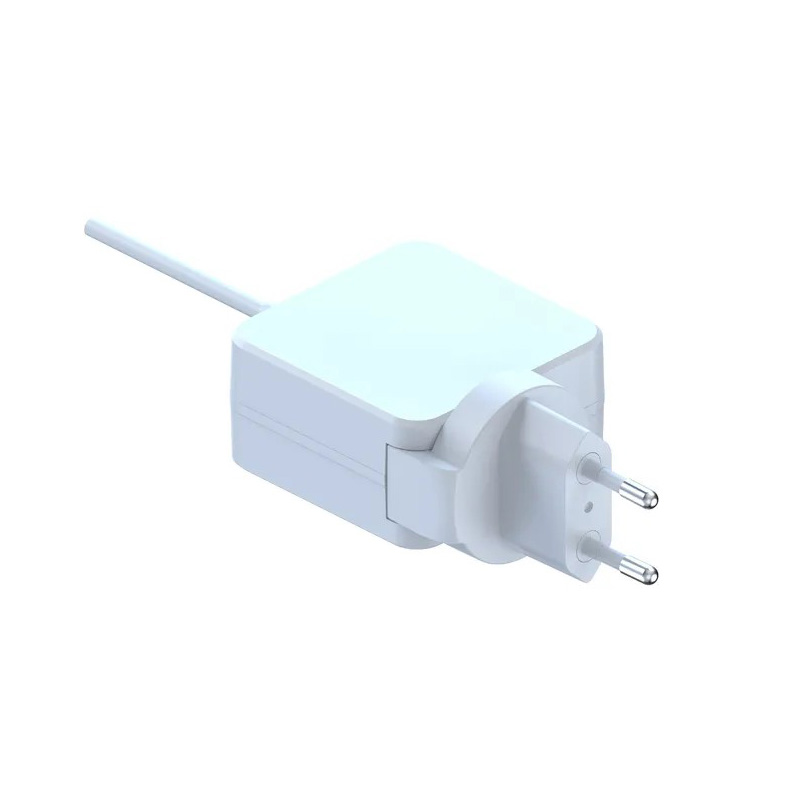
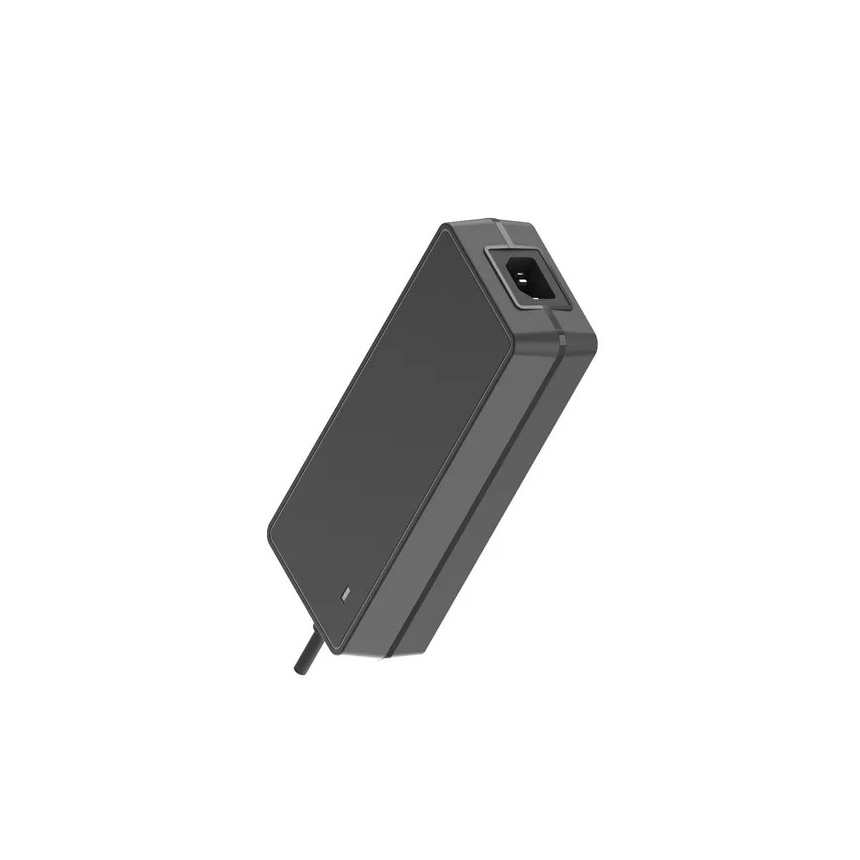
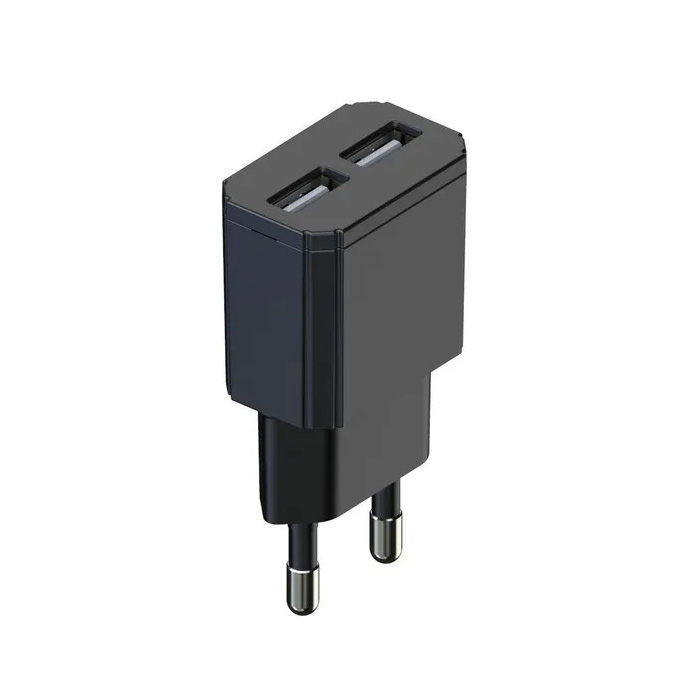
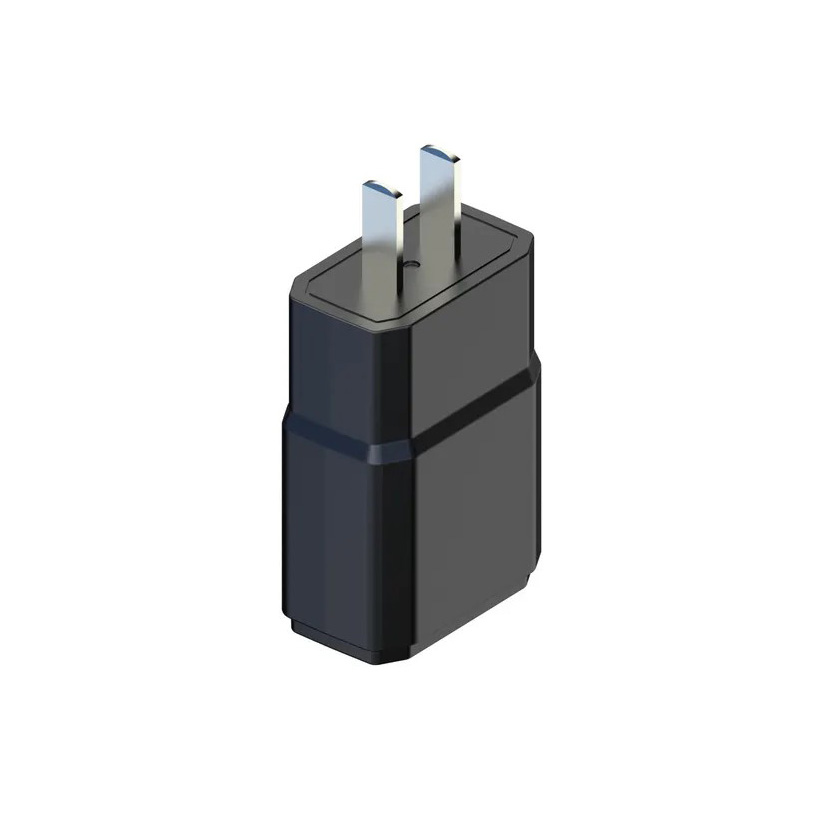
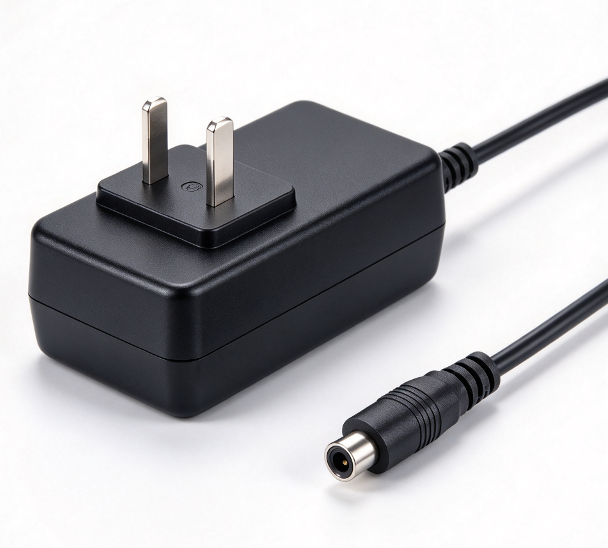
Simplify cross-border SKU rationalization. With interchangeable AC clip plugs (US, EU, UK, AU, CN) and universal wide-voltage inputs (90V-264V AC), device vendors eliminate localized motherboard re-spins, streamlining distribution logistics to global fulfillment centers.
Key Engineering Drivers Shaping Next-Gen IoT Power Architectures
The transition toward unified standards such as Matter, along with local voice intelligence processed at the edge, has shifted transient peak load behavior. A modern smart security camera or localized assistant does not draw a static continuous load; quiescent standby current may reside under 200mA, but instantaneous firing of IR illuminators, pan-tilt servo actuators, edge NPU compute bursts, and Wi-Fi uplink can generate momentary current spikes exceeding 200% of nominal baseline.
1. Dynamic Transient Response & Voltage Droop Immunity
Conventional commodity adapters often exhibit sluggish closed-loop compensation when transitions between sleep modes and full-load compute occur. The resulting millivolt rail droop can plunge the IoT core processor into an unpredictable brownout or watchdog reset condition. Our power development methodology utilizes optimized secondary-side error amplifiers and fast-response optocoupler feedback loops that maintain output deviation within ±3% under high slew-rate dynamic step loads (0% to 100% load steps at 1A/µs).
2. Low Peak-to-Peak Output Ripple for Sensitive Transceivers
Wireless IoT hardware modules operating across 2.4 GHz (Wi-Fi, Bluetooth Low Energy, Zigbee, Thread) and 868/915 MHz (Z-Wave, LoRaWAN) are vulnerable to parasitic switching frequency harmonics. Switcher noise leaking through the DC cable causes power supply rejection ratio (PSRR) degradation in on-board linear regulators (LDOs), directly elevating baseband phase noise and diminishing receiver sensitivity. FuYun's smart home grade wall-mount and desktop adapters achieve ultra-clean DC outputs with peak-to-peak ripple noise suppressed below 50mVp-p via multi-stage LC filters and low-ESR solid electrolytic capacitors.
3. Thermal Runaway Mitigation in Confined Spaces
Unlike industrial rack equipment cooled by forced-air convection, consumer smart home devices operate in dust-accumulating residential environments, tucked behind entertainment consoles, under drywall sockets, or within tight junction cabinets. Adapters must rely entirely on passive conductive and radiative cooling. By leveraging synchronous rectification topologies and high-grade 94V-0 flame-retardant polycarbonate enclosures, internal operating temperatures are kept low, yielding an MTBF (Mean Time Between Failures) exceeding 100,000 continuous hours at 25°C ambient.
| Smart IoT Device Class |
Typical Input Spec |
Peak Inrush/Transient Dynamic |
Core AC Adapter Bundling Prerequisite |
| Matter Multi-Protocol Hubs / Gateways |
5V DC / 2A–3A or USB Type-C |
Short radio polling bursts, ~1.5x nominal |
Ultra-low RF interference, Class B EMC compliance, low idle draw |
| Pan-Tilt-Zoom (PTZ) Edge AI Cameras |
12V DC / 1.5A–2.5A Barrel |
Motor spin-up + IR LED activation (>2.2x nominal) |
High surge headroom, extended DC cord (3m), outdoor surge protection |
| Smart Displays & Ambient Voice Assistants |
12V–24V DC / 24W–65W |
Audio amplifier bass peaks, high dynamic swing |
Rigid voltage regulation, zero acoustic hum (piezo-free magnetics) |
| Smart Home Actuators / Motorized Blinds |
12V–24V DC / 2A–4A |
High stall-current during motor initial startup |
Constant current foldback mode, robust overcurrent latching |
Device Bundling Economics: Why Hardware Innovators Outsource Power Supply Engineering
Startups and enterprise IoT device builders encounter a common strategic fork in the road: should the power conversion circuitry be embedded onto the internal mainboard (internal SMPS), or bundled as an external, certified AC-DC wall adapter? In over 85% of connected consumer devices, external AC adapter bundling proves markedly superior due to three overarching industrial variables:
-
Accelerated Time-to-Market: Integrating internal mains voltage (100–240V AC) requires extensive PCB spacing (creepage and clearance distances exceeding 6.4mm for reinforced isolation), high-voltage isolation barriers, dedicated thermal heatsinks, and arduous full-system safety filings with Underwriters Laboratories (UL) or TÜV Rheinland. An external pre-certified adapter shifts primary mains compliance to the power brick, leaving the IoT base unit as a Class III low-voltage device (SELV—Safety Extra Low Voltage). This slashes certification cycle times from months to weeks.
-
Miniaturization & Industrial Design Freedom: Modern home aesthetics favor ultra-compact, sleek, and discrete form factors. Relocating the bulk of step-down transformers, line filters, and high-voltage bridge rectifiers to an external wall socket allows product designers to maximize internal enclosure volume for premium audio drivers, multi-element antenna arrays, and onboard thermal management.
-
Global Inventory and Customs Decoupling: Packaging a universal base product with localized regional plugs (or utilizing a single swappable-pin travel adapter) dramatically reduces inventory holding costs. Hardware manufacturers stock a universal device SKU and pair it in downstream packaging lines with destination-specific plug adapters, eliminating localized PCB redesigns.
Manufacturing Excellence & Reliability Assurance at FuYun (RUIYU)
Mass-producing external power solutions that complement top-tier consumer electronics requires rigorous manufacturing orchestration. Founded in 2010, Shenzhen FuYun (RUIYU) Technology Co., Ltd. has scaled into an industry leader, maintaining an 800+ member workforce, high-speed automated SMT assembly lines, computerized transformer winding machinery, and automated wave-soldering lines. Every unit undergoes automated optical inspection (AOI), 100% full-load elevated temperature dynamic burn-in testing, and high-voltage breakdown dielectric withstand testing (Hi-Pot) prior to outer carton packing.
Our comprehensive qualification protocols ensure your hardware ecosystem maintains pristine brand equity in the field. When your bundled smart home devices hit tier-1 retail shelves or direct-to-consumer online platforms, returns driven by power supply failures are effectively eliminated.